Downtown Puerto Vallarta (El Centro)
The historic centre — the Malecón, the crowned church and the city's civic heart.
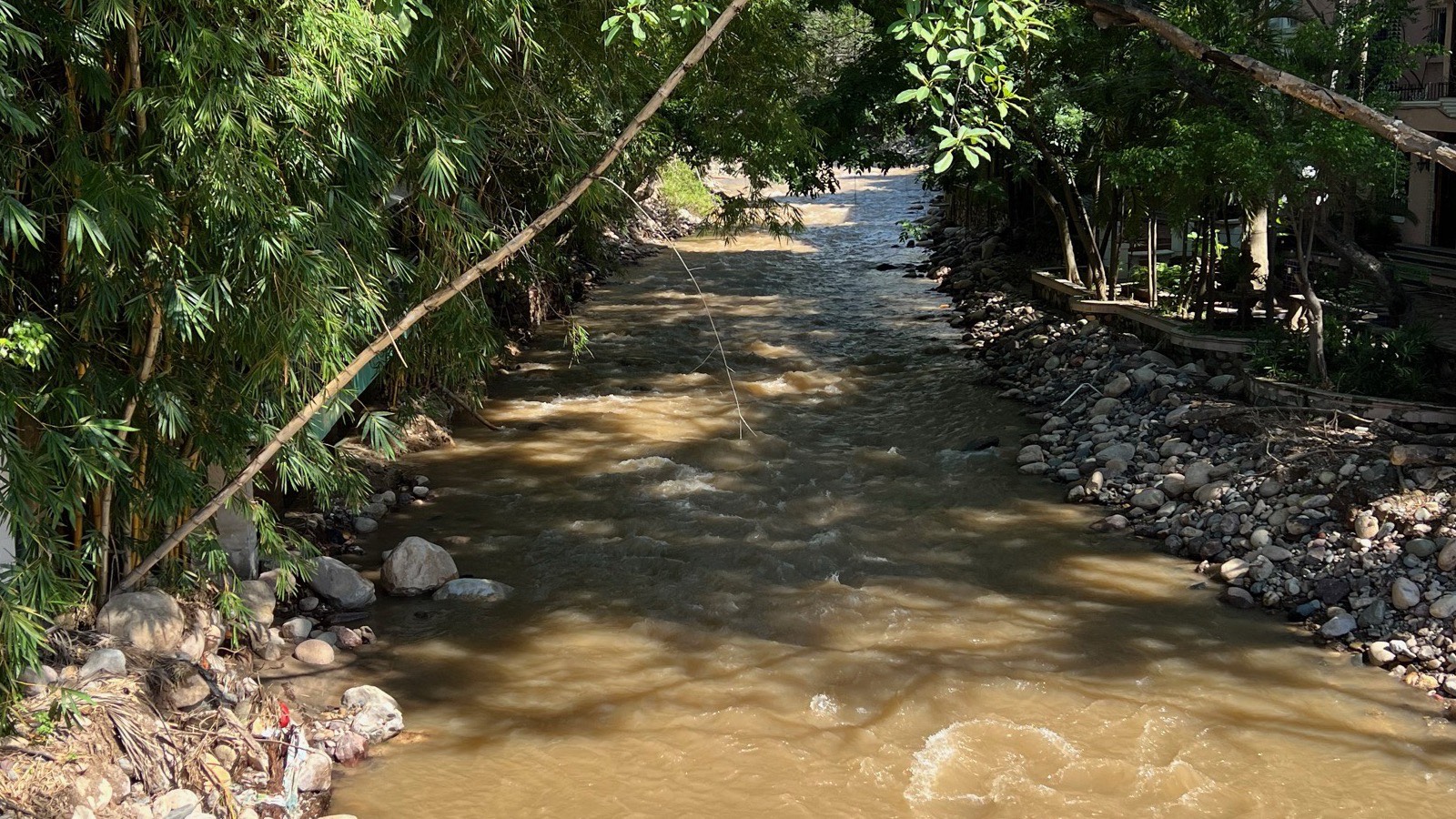

Downtown — El Centro — is the historic core of Puerto Vallarta, just north of the Cuale River. It's where the Malecón runs, where the landmark Church of Our Lady of Guadalupe stands, and where much of the city's civic and festival life happens.
Getting your bearings
Downtown is built up the hillside from the seafront. It's compact enough to cover on foot in an afternoon, and it divides into three simple layers: the Malecón along the water, the commercial streets one block back, and the steep residential lanes climbing behind them. Almost everything a visitor comes for sits in the first two.
What to see
- The Malecón — the seafront boardwalk doubles as an open-air gallery of sculptures; the seahorse is the one everyone photographs. The sand artists and the Vallarta dancers are here too, and it costs nothing.
- Church of Our Lady of Guadalupe — its crown-topped tower is the city's emblem and the anchor of the main square. Free to enter, and the interior is open to visitors outside services; dress modestly and be quiet during services.
- Plaza de Armas & the bandstand — the civic heart, with free performances most evenings in season. Locals turn out as much as visitors, and it's the best people-watching in the city.
- Los Arcos amphitheatre — the arches and open-air stage on the seafront opposite the square, used for concerts and public events, and a natural gathering point at sunset.
- The municipal market (Mercado Río Cuale) — crafts, silver, leather and food stalls, stacked over two floors by the river (crafts downstairs, food upstairs), with better prices than the seafront stalls.
- Isla Cuale — the leafy island between the river channels, with a cultural centre, a small museum, craft stalls and a shaded walk, and a genuine drop in noise the moment you step down onto it.
Downtown vs Old Town
Downtown (north of the river) is the civic and historic centre; Zona Romántica (south of the river) is the restaurant-and-nightlife heart. They're a short walk apart along the Malecón, and most visitors move between the two constantly. For where to base yourself, see where to stay.
Gringo Gulch
Climb the lanes behind the church, onto the northern slope above the Río Cuale, and you reach Gringo Gulch. American and Canadian residents began settling here in the 1950s: "gulch" for the ravine, and "gringo", affectionately, for the newcomers. The architect Fernando "Freddy" Romero, who arrived in 1952, helped shape the look now called estilo Vallarta: whitewashed walls, red-tiled roofs and wrought iron. Today it's a quiet tangle of staircases, shaded lanes and small plazas with views over the town. Go on foot, in the cooler part of the day, with shoes that grip.
Its best-known address is Casa Kimberly. Richard Burton, in town in 1963 to film The Night of the Iguana, gave the house to Elizabeth Taylor for her 32nd birthday in 1964, and built the bridge linking it to his own house across the lane. The bridge is still there, and the two houses are now an adults-only boutique hotel of nine suites, with a restaurant, at Calle Zaragoza 445.
Eating and drinking downtown
Downtown's food is more mixed than Old Town's. The seafront strip is the weakest part — convenient, touristy, and rarely the best value. Walk two streets inland and it improves immediately: taquerías used by office workers, birria stands, and long-running family restaurants. For a serious meal, most people still cross the river.
Staying downtown
Fewer hotels than Old Town or the resort zones, and they tend to be smaller and cheaper. It suits you if you want to be at the centre of the city's civic life and festivals, and don't mind a narrower city beach. The trade-off against the alternatives is in where to stay.
When downtown is at its best
| When | What it's like |
|---|---|
| Morning | Working city. Markets busy, church quiet, few tourists, pleasant temperature. |
| Midday | Hot and exposed. The Malecón has almost no shade — this is the time for the market or Isla Cuale. |
| Late afternoon | The city comes back out. Best light for photographs. |
| Sunset onwards | The Malecón at its best: performers, families, food carts, the whole city walking. |
| Cruise-ship days | Noticeably busier around the Malecón and the craft stalls, and vendors more persistent. |
Downtown is also at its best during festivals — the Fiestas de Guadalupe in early December and Día de los Muertos in November both centre on downtown, and the atmosphere is unlike the rest of the year. See events.
Getting there
From Old Town it's a 10–20 minute walk, depending on where you start, along the Malecón or across Isla Cuale — pleasant, and often faster than a taxi in evening traffic; the seafront is the nicest approach. Any northbound bus also does it. From the Hotel Zone, any southbound coastal bus. See getting around.
Practical notes
- It's steeper than it looks. The streets behind the Malecón climb quickly; wear shoes with grip.
- Parking is difficult. If you've rented a car, leave it — see car rental.
- Expect to be approached by timeshare sellers near the Malecón. A firm "no, gracias" and continuing to walk is all that's needed.
- Cash for the market and stalls; cards for the restaurants. See money & tipping.
Latest articles
Puerto Vallarta Transport Cost Estimator
What it costs to get around Puerto Vallarta and Banderas Bay — by bus, Uber, taxi or water taxi — with the…
Read →
Puerto Vallarta Trip Budget Calculator
Work out what your trip will cost — in total, per person and per day — from a guesthouse budget to a resort…
Read →
Puerto Vallarta Map
The city, the beaches, the boat-only coves and the towns around Banderas Bay on one map — each linked to its…
Read →