Swimming with Dolphins in Puerto Vallarta
What the dolphin programmes involve, what Mexico's 2025 law changed, and how to see dolphins in the wild instead.
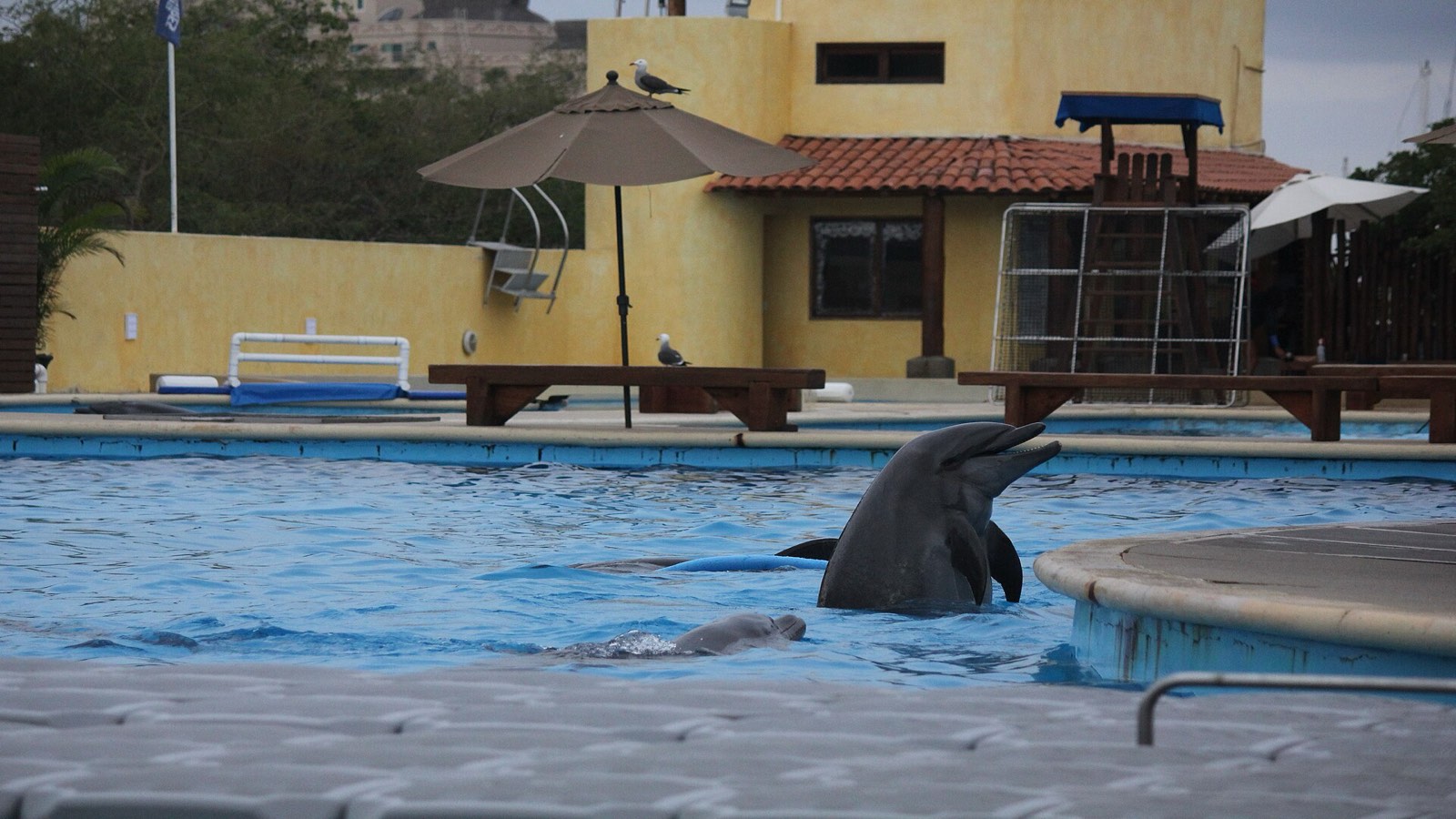

Dolphin swims are sold all over Puerto Vallarta. Since July 2025 they have operated under a new Mexican law that bans keeping any new dolphins in captivity, and many visitors now wonder whether to go at all. Here's what's on offer, what the law says, what welfare organisations argue, and how to see dolphins in the wild, so you can decide for yourself.
Where the programmes are
Two facilities in Nuevo Vallarta, about 15 to 20 minutes from the airport, sell dolphin programmes: Vallarta Adventures' Marine Mammal Center and Dolphin Discovery at Aquaventuras Park. Both offer the same broad formats:
- Encounters: a shorter session standing in shallow water, open to young children with a paying adult.
- Swims: 40 to 60 minutes in deeper water, generally from age 5 or 6, with children under a set height accompanied by an adult.
- Typical rules: a life jacket throughout, and no sunscreen, jewellery or cameras. Pregnant visitors are excluded, or limited to the encounter in early pregnancy.
What it costs. In October 2026 the list prices ran from US$59 per person for Vallarta Adventures' shallow-water encounter to US$159 for a 40- to 60-minute swim at either facility, with online discounts of 30 to 38 per cent on offer. Dolphin Discovery's prices include entry to Aquaventuras Park and a meal, and it charges children aged 6 to 12 less for its swims.
What Mexico's 2025 law changed
On 16 July 2025, Mexico published a reform of its General Wildlife Law, known as the "Ley Mincho". It passed unanimously in the Senate and by 415 votes in the Chamber of Deputies, and came into force the next day.
- No new captive dolphins: marine mammals may no longer be kept for entertainment, and breeding is banned except to recover threatened species.
- Existing animals stay: facilities may keep the dolphins they already have, under their approved management plans, until those animals die.
- What's allowed with them: only free swimming and interactions supervised by trainers, without touching the eyes, blowhole or genitals.
- What's banned: riding a dolphin, being towed while holding its dorsal fin, and the "foot push", where a dolphin pushes a swimmer by the soles of the feet.
- Sea pens, not pools: dolphins must be moved from concrete pools to enclosures in the sea within 18 months of the inventory each facility filed with the environment ministry. Media have put that deadline at around April 2027.
Putting the law into practice has been slow. By August 2026 its implementing regulations still hadn't been published, and the environmental enforcement agency, PROFEPA, had not yet counted the dolphins held in Jalisco and Nayarit. Several operators, including one in Nuevo Vallarta, have challenged the law in the courts. In short, dolphin swims are still legal around Puerto Vallarta, but in a restricted form: any programme still offering a ride, a fin tow or a foot push is breaking the law.
The welfare debate
- World Animal Protection, which campaigned for the law, says captive dolphins suffer from chronic stress, abnormal behaviour and illnesses linked to confinement, and that watching animals in the wild is the most respectful way to experience them.
- Whale and Dolphin Conservation discourages swimming with dolphins at all, including wild ones, as intrusive and stressful, and recommends responsible whale and dolphin watching instead.
- The industry association of Mexican dolphin parks responded that the reform does not oblige existing centres to close.
Our view: if seeing dolphins matters to you, see them in the wild, where you're watching animals behave as they would anyway.
Seeing wild dolphins in the bay
Banderas Bay has plenty of wild dolphins. A survey carried out between 2021 and 2023 recorded bottlenose dolphins, pantropical spotted dolphins, rough-toothed dolphins and false killer whales, and orcas in its final season. Many boat trips meet dolphins along the way, particularly whale-watching trips from December to March, though sightings are never guaranteed. See boat tours.
Dedicated wild-dolphin trips cost about US$116 or MXN 2,000 per adult for four hours, usually combined with snorkelling, according to the published prices of Ecotours Vallarta and Vallarta Natours in October 2026.
Mexico's whale-watching rules don't cover dolphins, and there is no specific standard for watching them. So choose a captain who keeps a respectful distance, lets the dolphins approach rather than chasing or circling them, and doesn't put swimmers in the water with them.
If you do book a captive programme
- Check the format: free swimming or a supervised interaction only, with no ride, fin tow or foot push.
- Ask what happens next: where and when the dolphins will move to sea pens, as the law requires.
- With children, check the age and height rules before you book; they differ between the two facilities.
Latest articles
Puerto Vallarta Transport Cost Estimator
What it costs to get around Puerto Vallarta and Banderas Bay — by bus, Uber, taxi or water taxi — with the…
Read →
Puerto Vallarta Trip Budget Calculator
Work out what your trip will cost — in total, per person and per day — from a guesthouse budget to a resort…
Read →
Puerto Vallarta Map
The city, the beaches, the boat-only coves and the towns around Banderas Bay on one map — each linked to its…
Read →